This article was published through Outrank and has not been independently fact-checked by Top UGC Tools. Verify product claims, prices, and recommendations against current primary sources.
Spark Ads are TikTok's native format for turning existing organic posts into paid ads, and the key detail is that the original post keeps its social proof and engagement history. They're not a separate creative upload, they're paid distribution attached to content that already lives on TikTok.
That sounds simple. In practice, Spark Ads are a permissions workflow, an attribution mechanic, and a creator-led media format that changes how performance teams buy reach.
Table of Contents
- What Are Spark Ads?
- Why the name matters
- What brands actually get
- How Spark Ads Work Differently
- The attribution difference is the point
- Why this is not just “better native advertising”
- Permission and Authorization Required
- How the workflow usually runs
- What teams need to govern
- Why Spark Ads Drive Performance
- Social proof does real work
- What the lift usually comes from
- Use Cases for Brands and Creators
- Where they shine
- Where they add complexity
- Getting Started Checklist
- What good setup looks like
<a id="what-are-spark-ads"></a>
What Are Spark Ads?
A lot of marketers first hear the name and assume Spark Ads are just TikTok's version of a boost button. That's the wrong mental model. The format started as something closer to Boosted TikToks, then evolved into a more formal product with campaign infrastructure, authorization rules, and identity options for both brands and creators. TikTok's own help documentation frames Spark Ads as a way to promote existing organic posts, from either a brand account or an authorized creator account, while preserving the original post's identity and engagement signals. (TikTok Spark Ads help article)
<a id="why-the-name-matters"></a>
Why the name matters
The “spark” part isn't just branding. It signals that the paid ad starts from something already alive, a post with comments, likes, shares, or follows already attached to it. Instead of uploading a fresh ad asset and hoping it earns trust from zero, the advertiser amplifies a live post that keeps its native presentation.
That matters for teams running UGC-heavy programs. A creator's original post remains the central asset, and paid media amplifies it rather than replacing it with a sterilized ad shell. For brand teams, that means the ad is still recognizable as TikTok content, not a repackaged interruption.
A Spark Ad is not a new video disguised as an ad. It's an existing post with paid distribution layered on top.
<a id="what-brands-actually-get"></a>
What brands actually get
Brands can use their own posts or creator posts, as long as the creator authorizes use. TikTok also documents that Spark Ads work with video posts and photo posts, and can appear in in-feed placements as well as reservation products such as TopView. The practical takeaway is that Spark Ads aren't a side feature for casual promotion, they're a platform-native product for running creator-led or brand-led content at scale. (TikTok Spark Ads help article)
That evolution from boosted post to formal ad product is why the format gets mishandled so often. Teams treat it like repurposing. In reality, it behaves more like a paid channel built around an organic identity, with consent, asset management, and campaign controls baked in.
<a id="how-spark-ads-work-differently"></a>
How Spark Ads Work Differently
A standard in-feed ad and a Spark Ad can look similar in the feed, but the operational setup is different. A conventional in-feed campaign starts with a separate creative file that the brand uploads into paid media. Spark Ads keep the paid delivery attached to an existing organic post, so the post remains the live asset while media support is layered on top. TikTok documents that the promotion sits on the original post rather than on a separate ad file. (TikTok Spark Ads help article)
<a id="the-attribution-difference-is-the-point"></a>
The attribution difference is the point
That setup matters because the post keeps its public life intact. The audience sees one post, the comment thread stays in one place, and the engagement trail does not split across two versions of the same message.
For UGC campaigns, that is a practical advantage. If a creator post is already getting traction, Spark Ads let you scale the same social proof instead of fragmenting it across separate organic and paid assets. A creator clip that has already earned strong comments can keep that momentum while paid delivery expands reach.
<a id="why-this-is-not-just-better-native-advertising"></a>
Why this is not just “better native advertising”
Spark Ads still preserve the original post's identity. TikTok says the ad's display name and caption text inherit the selected organic post and cannot be edited in Ads Manager during creation, and posts that are banned organically are rejected as Spark Ads. That gives you less room to reshape the message, but it also keeps the paid version close to the content that already earned attention. (TikTok Spark Ads help article)
If the organic post would not persuade a cold audience on its own, Spark Ads will not fix that problem. They scale what already feels credible.
The trade-off is clear. Paid media and organic proof stay tied to one post, which is useful for creator-led campaigns and limiting for teams that want full control over captions, framing, or creative structure.
<iframe width="100%" style="aspect-ratio: 16 / 9;" frameborder="0" allow="autoplay; encrypted-media" allowfullscreen="true" src="https://www.youtube.com/embed/-6vdvTr3PCg"></iframe>
<a id="permission-and-authorization-required"></a>
Permission and Authorization Required
Spark Ads require explicit creator authorization before any paid distribution can begin. TikTok's setup allows two routes, a brand's linked TikTok account, or an authorized account or post owned by another creator. For creator content, the post owner must approve use before the advertiser can promote it, which puts the format closer to rights-managed media than casual boosting. (TikTok Spark Ads creation guide)
<a id="how-the-workflow-usually-runs"></a>
How the workflow usually runs
The creator or post owner generates an authorization code for the selected post, then the advertiser enters that code in Ads Manager or through the API before launch. TikTok's API workflow also covers retrieving authorized Spark Ad posts and later unbinding a post, which shows the format is built for repeatable campaign operations, not one-off sharing. In Business Center, the relevant permission is called Deliver ads. (TikTok Spark Ads for Smart Campaigns)
<a id="what-teams-need-to-govern"></a>
What teams need to govern
Ownership is the part teams miss most often. The creator publishes the post, and the advertiser receives authorized access to distribute it as an ad. That means the campaign team has to track who owns the post, who can bind it, how long the authorization lasts, and when it should be revoked.
The format also supports scale. TikTok states that each Ads Manager account can support up to 10,000 Spark Ads, which makes the system suitable for large libraries of creator-led assets, not a handful of tests. (TikTok Spark Ads for Smart Campaigns)
| Identity Type | Usage Scenario | Scope | | --- | --- | --- | | Authorization code | A creator gives a brand permission to run one post | Post-level permission | | Linked TikTok business account | A brand promotes its own account content | Brand-owned identity | | Business Center authorized account | Approved team members use eligible posts across ad accounts | Account-level governance |
For rights management teams, that scope distinction matters as much as the ad itself. If you are handling creator agreements, align the media workflow with formal usage rights, and document the process before launch. UGC rights management practices are easier to enforce when permissions, ownership, and revocation rules are clear upfront.
<a id="why-spark-ads-drive-performance"></a>
Why Spark Ads Drive Performance
TikTok reports that Spark Ads have a 134% higher completion rate and a 157% higher six-second view-through rate than standard formats, and the platform also points to higher CTR, CVR, and lower CPA in its own comparisons. Those numbers are useful, but they don't prove Spark Ads magically outperform every other setup in every account. Creator selection, audience fit, objective, and the quality of the original post still shape the outcome. (TikTok Spark Ads blog)
<a id="social-proof-does-real-work"></a>
Social proof does real work
The performance logic is easy to understand once you think like a viewer. A post that already has visible comments and likes feels like part of TikTok, not a brand interruption. The user sees a real conversation before they see a CTA, and that lowers friction.
That's also why Spark Ads are so useful for UGC-led acquisition. The format preserves the creator's voice, the public response to the post, and the native context around it. When a post has already earned attention, paid media doesn't have to create trust from scratch.
The strongest Spark Ad is usually not the prettiest one. It's the one that already made people stop, watch, and respond before spend entered the picture.
<a id="what-the-lift-usually-comes-from"></a>
What the lift usually comes from
The lift is rarely just the format. It's the combination of recognizable human delivery, visible engagement, and the fact that the post feels like content first and advertising second. A creator's comments section often does more persuasion than the ad copy itself, especially when buyers are comparing similar products and need a reason to believe one feels safer or more relevant.
TikTok's own Creative Playbook also reports positive internal comparisons, but those numbers are dated relative to current auction conditions. That's why the smarter question isn't whether Spark Ads are universally superior. It's whether a given creator post has enough social proof and message clarity to justify the permissions overhead and media spend.
<a id="use-cases-for-brands-and-creators"></a>
Use Cases for Brands and Creators
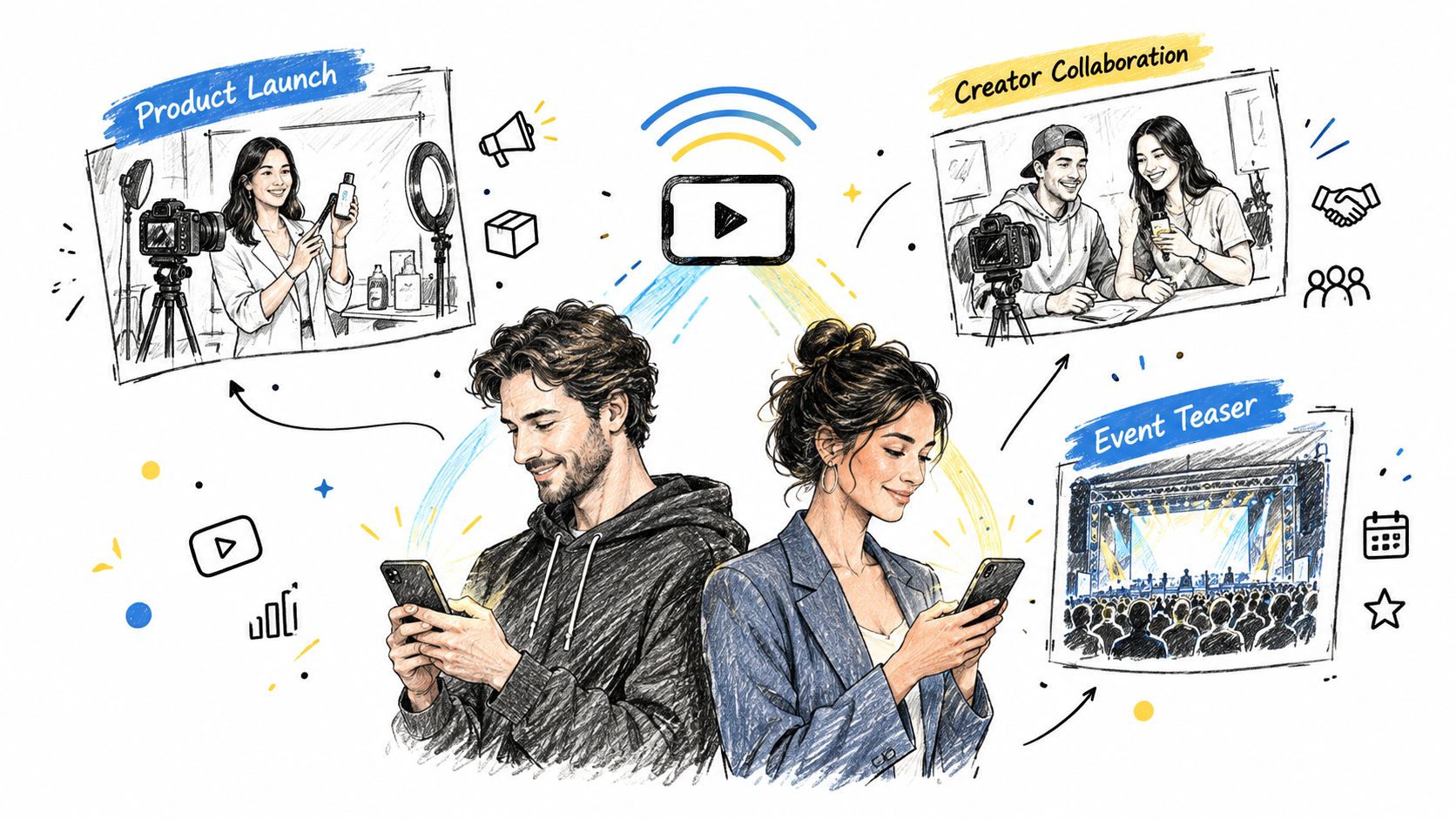
Spark Ads work best when the content already has a job to do. If a creator post is pulling genuine attention, the format lets you keep the post intact and extend its reach without rebuilding it into a standard ad. That makes Spark Ads a strong fit for scaling organic winners, creator whitelisting programs, and UGC-first performance campaigns where trust matters as much as click intent.
<a id="where-they-shine"></a>
Where they shine
They're especially useful when the brand wants the audience to meet the creator, not just the product. That's common in categories where demonstration, testimony, or visible product use matters more than polished production. It's also why Spark Ads fit creator partnerships so naturally.
They can also be useful for TikTok Shop promotion, since the post stays native and the social proof keeps building on the public post. But that doesn't mean they should replace every direct-response ad. If you need total control over the hook, the CTA, or the pacing, a standard in-feed ad may be cleaner.
<a id="where-they-add-complexity"></a>
Where they add complexity
Spark Ads are weaker when the post itself is weak. If the creative doesn't already earn attention, permission management just adds friction to a bad asset. They're also not ideal when a team wants rapid A/B testing across many message variants, because the format ties spend to an existing post identity.
Decision rule: choose Spark Ads when credibility is part of the conversion path. Choose standard in-feed ads when creative control matters more than social proof.
For teams comparing creator ecosystems, the broader marketplace matters too. The right creator source is often the difference between a scalable Spark program and a short-lived test. A curated UGC platform directory can help teams locate the kind of creator supply that fits a Spark-led workflow.
<a id="getting-started-checklist"></a>
Getting Started Checklist
The fastest way to waste time with Spark Ads is to treat them like a last-minute upload. The right setup is more operational than most brands expect. The post has to be eligible, the permissions have to be in place, and the team has to know whether the ad is running from a brand account or a creator-authorized post.
Before launch, check the basics in order.
- Confirm post eligibility. The organic post has to be publishable as a Spark Ad, which means it needs to comply with TikTok's content rules and be available for authorization.
- Lock the identity route. Decide whether the campaign will use a linked brand account, a creator authorization code, or a Business Center authorized account.
- Track permissions cleanly. Record who owns the post, who granted access, and when the authorization expires or is revoked.
- Review the creative as-is. The caption, display name, and public context are inherited from the organic post, so the team should approve the source post before spend starts.
- Plan for post lifecycle control. TikTok notes that an organic post can't be deleted while it remains authorized as a Spark Ad, so governance needs to happen before launch, not after problems appear.
- Use a repeatable brief. A structured brief keeps creator approvals, timing, and usage scope aligned so launch doesn't stall on missing rights. A UGC brief builder helps teams standardize that process.
<a id="what-good-setup-looks-like"></a>
What good setup looks like
A strong Spark Ad workflow doesn't feel improvised. The creator knows the content can run as paid media, the brand knows what it's allowed to use, and the media buyer knows exactly which post is bound to which account. That clarity keeps the program from turning into a string of Slack messages and expired codes.
It also keeps the format scalable. Once the permissions, review process, and asset tracking are documented, Spark Ads become a repeatable acquisition channel instead of a one-off experiment.
Top UGC Tools helps marketers and creators map the platforms, workflows, and research systems that make UGC programs perform. If you're building Spark Ads around creator content, visit Top UGC Tools to find tools and guides that can support rights management, briefing, and campaign ops.