This article was published through Outrank and has not been independently fact-checked by Top UGC Tools. Verify product claims, prices, and recommendations against current primary sources.
A creator can have a polished portfolio, a brand can need ten usable videos by Friday, and both can still waste hours because the platform hides the actual decision points. Who can join, how the payout works, what rights get handed over, and whether the workflow fits your tools matter more than the homepage promises. That's why the best UGC platforms for creators aren't just "places to get jobs." They're different systems for discovery, payment, rights, and production.
This roundup sorts the options by four practical signals, scale, pay model, discoverability, and workflow fit. It also calls out the creator-side entry barriers and payout mechanics that usually get buried until after signup. If you're trying to find paid work with less guesswork, or you're trying to decide whether a platform fits your stage, this is the faster way to narrow the field.
Table of Contents
- 1. Billo
- What Billo does well
- What to watch
- 2. Collabstr
- 3. Influee
- Creator fit, in practice
- 4. Trend
- Creator-side fit
- What to watch
- 5. Insense
- The practical fit
- What to watch
- 6. #paid
- 7. Aspire
- Why creators keep it on the shortlist
- What to watch
- 8. Later Creator & Brand Collabs
- What changes for creators
- What to watch
- 9. Pearpop
- What to watch
- 10. Top UGC Tools
- Why creators use it
- What to watch
- Top 10 UGC Platforms Comparison
- Choosing the Platform That Fits Your Workflow
<a id="1-billo"></a>
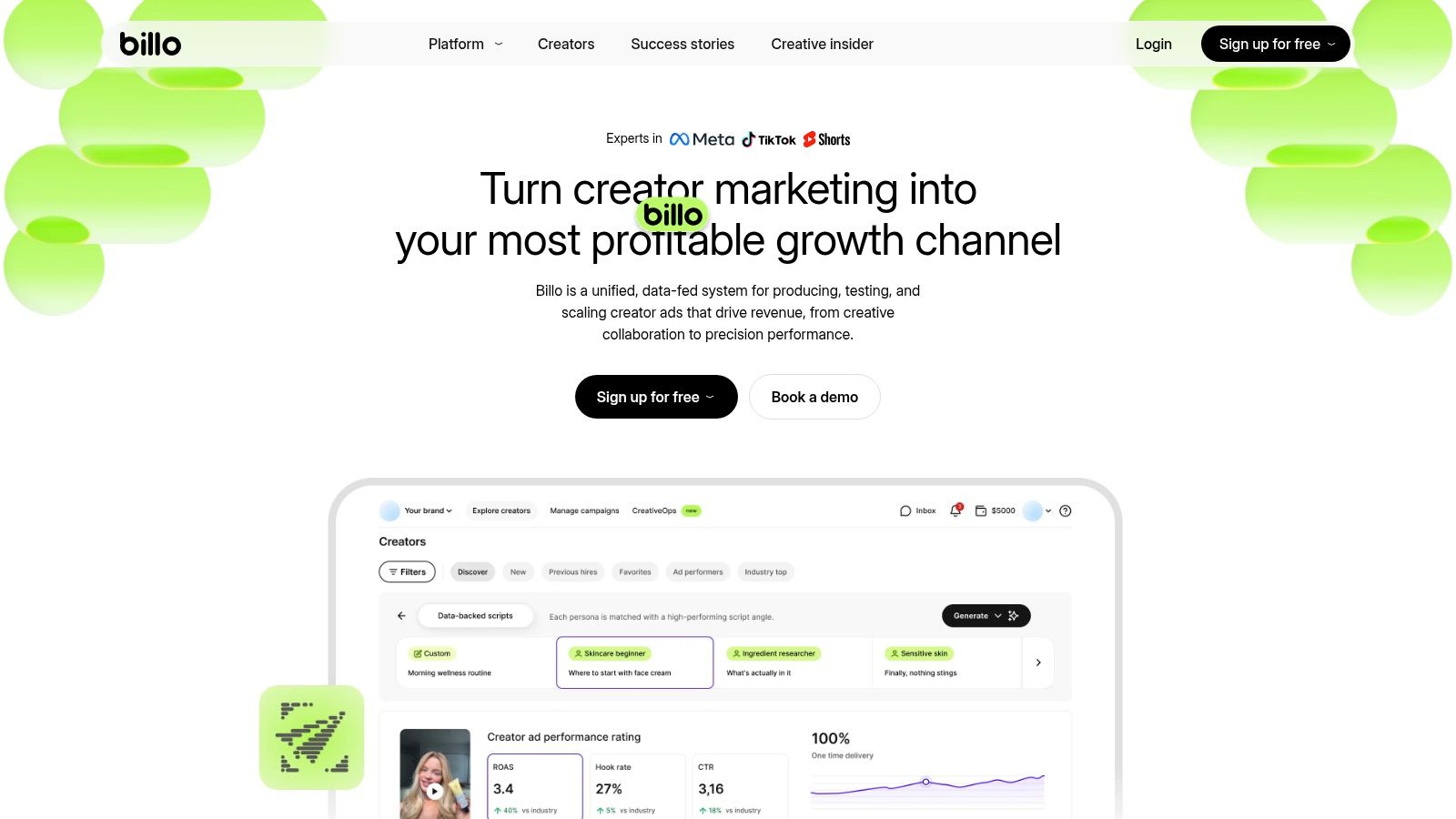
1. Billo
A creator with a solid filming setup and a brand that needs clean UGC fast can both benefit from Billo. It fits creators who want brief-driven paid work without building a large audience first. The workflow is built around standardized orders, so you spend less time pitching and more time producing. The trade-off is clear. Standardization usually limits room to negotiate and leaves less upside than a direct brand relationship.
Scale: Billo sits inside the creator-economy market that keeps expanding as brands want faster sourcing and more predictable content supply. Goldman Sachs estimated that market at about $250 billion in 2024 and projected about $480 billion by 2027 (creator economy benchmark). That matters because repeatable UGC systems become more valuable as demand rises.
<a id="what-billo-does-well"></a>
What Billo does well
Billo's mobile-first flow keeps the entry path manageable. You move from brief to deliverable inside a contained workflow, which helps if you want to build a paid portfolio quickly without a lot of admin overhead.
- Predictable scopes: Standard deliverables make it easier to know what you are accepting before you start.
- Fast production rhythm: The format suits creators who can turn around short-form assets without a long pre-production cycle.
- Portfolio building: It is easier to get reps on common DTC-style work, especially in beauty, wellness, and home.
Practical rule: If you are still refining your filming process, standardized briefs are often better than open-ended creative asks. They create fewer surprises and cleaner revision boundaries.
Creator-side barriers: Billo is not an open marketplace. You still need approval, and brief availability can vary by niche and by week. That rewards creators who stay ready to apply. It does not suit creators who expect a fixed volume of work every day.
Payout mechanics: The main advantage is scope clarity before you start. The main risk is pricing. Entry rates can be lower than direct brand deals, so the key question is whether higher flow and less friction make up for the thinner margin.
<a id="what-to-watch"></a>
What to watch
If you want highly customized concepts, Billo can feel restrictive. If you want more control over usage rights negotiation or package pricing, other platforms in this list may fit better. Billo works best when you value quick turnaround and repeatable paid output over deep negotiation.
<a id="2-collabstr"></a>
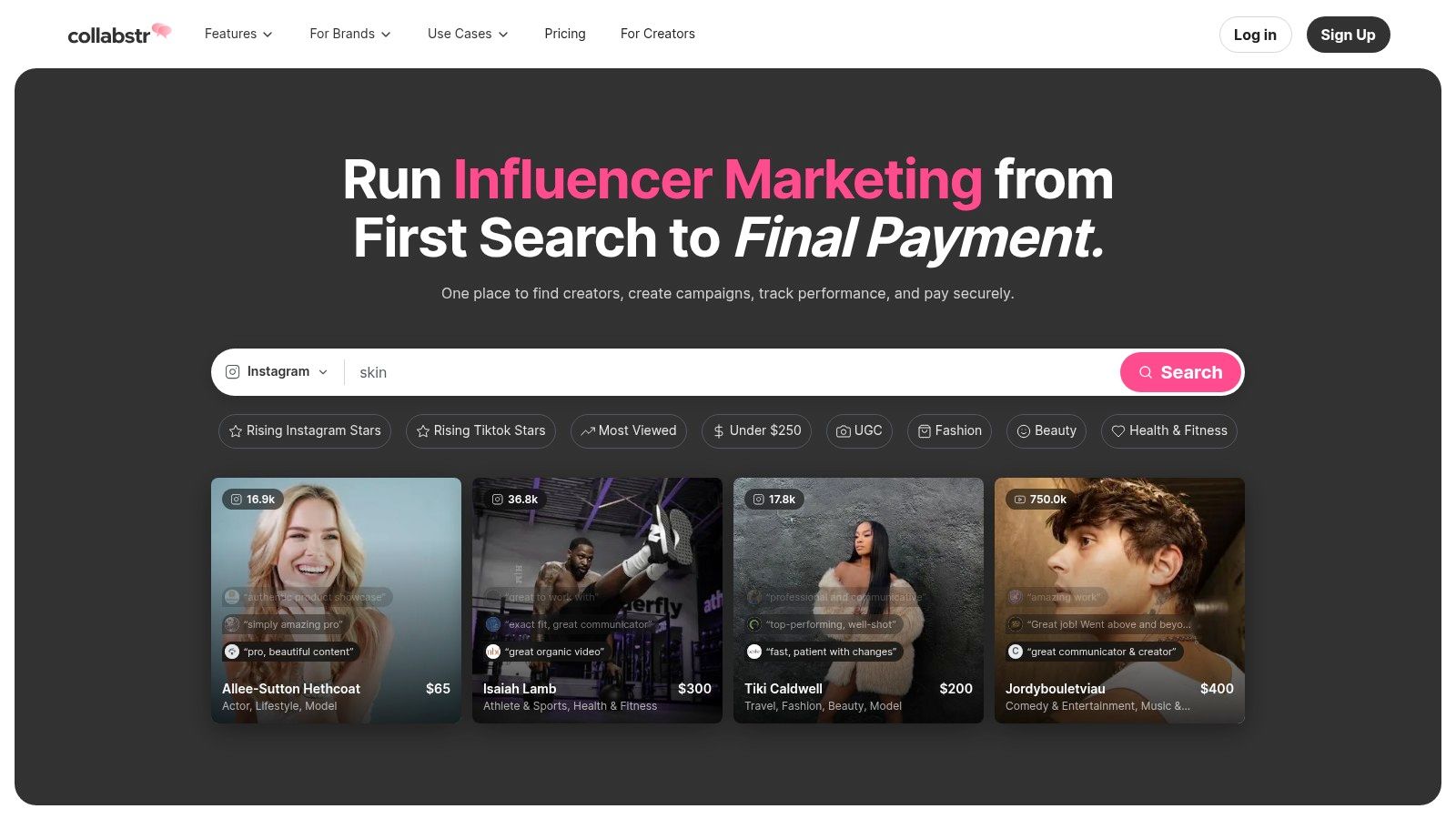
2. Collabstr
Choose Collabstr if you want to control your own pricing and let brands shop your offers instead of chasing briefs. The trade-off is simple. You gain more control over package design and positioning, but you also carry more responsibility for making the storefront look credible and easy to buy from.
For creators who care about cash flow, the payment model matters as much as the deal size. Visa's Visa creator report surveyed 1,067 creators across five countries and found that only 42% received payments within a week, 26% said payment delays harmed content production, and 30% wanted faster access to earned funds. That is the backdrop here. A platform that makes pricing visible and booking direct can help, but only if payout timing is workable for your business.
Collabstr is useful for creators who already know how to sell themselves. Your profile acts like a storefront, and your packages need to do the heavy lifting before a brand ever messages you.
- Public discoverability: Brands can review your profile and examples before they book.
- Pricing control: You set the package structure, which helps if you sell stand-alone videos, photos, or bundled deliverables.
- Escrow-style booking: The checkout flow can make the transaction feel more secure on the buyer side.
Creator-side barriers: Joining is straightforward, but standing out is not. Open marketplaces still reward clean positioning, strong samples, and a profile that looks ready for business. If your examples are weak or your offer is vague, you are easy to skip.
Payout mechanics: The appeal is clearer terms and payment handling that feels less manual than direct invoicing. The risk is volume. If booking flow is slow, the model loses value fast, even when the rate card looks good. Creators who can attract inbound interest and keep their storefront updated tend to get more out of it than creators who want passive demand.
What to watch: Inquiry quality can vary. Some leads are serious, some are not. Treat the storefront as an active sales page, not a one-time profile setup.
<a id="3-influee"></a>
3. Influee
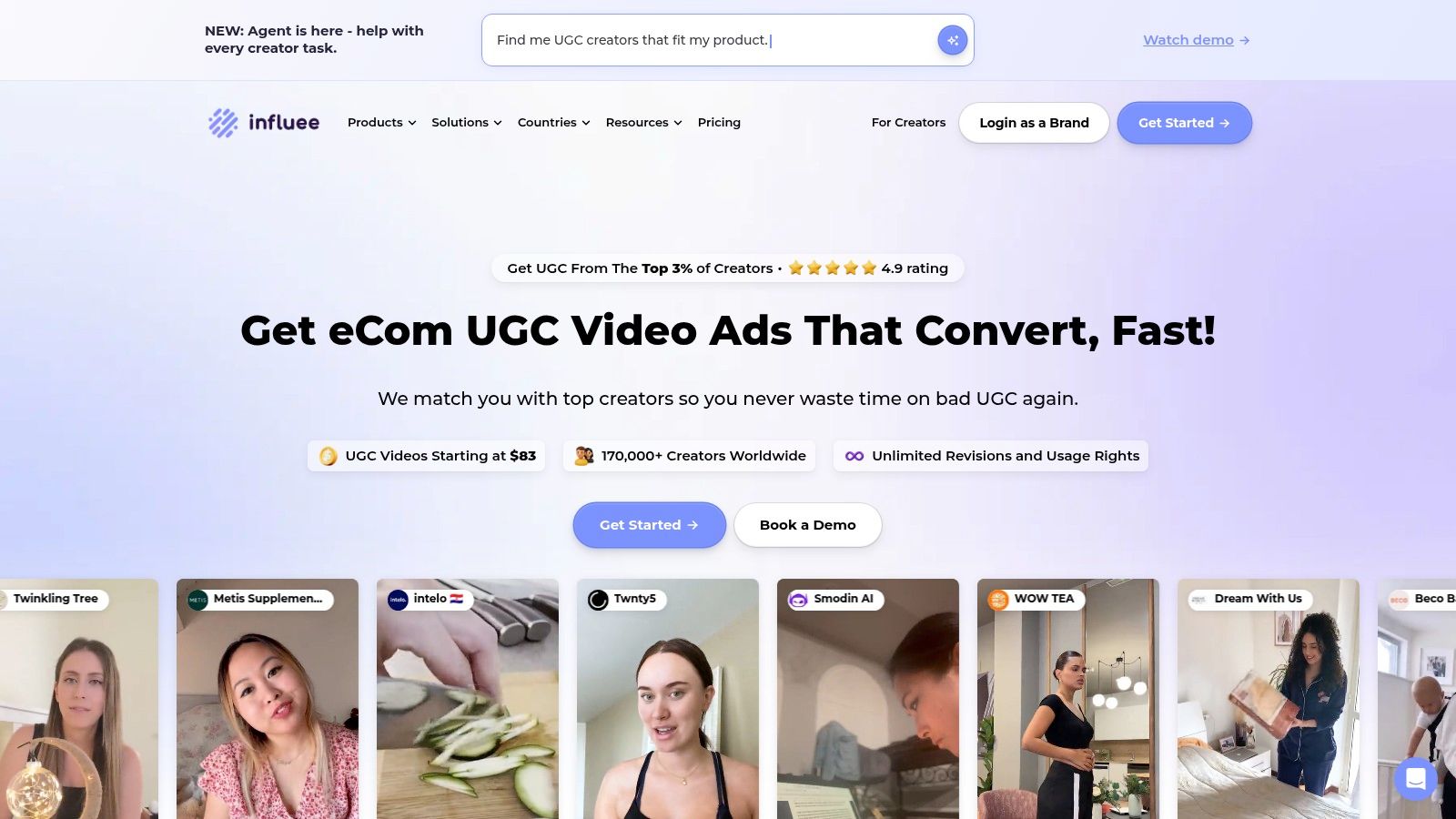
A creator sending work across markets needs two things fast, payment protection and a quote that does not drift away from local expectations. Influee is built around that problem. It suits creators who want tighter structure around pricing, especially when currencies, banking systems, or regional norms make direct deals harder to judge.
The practical value shows up in three areas. Regional access helps surface work that fits your market. Pricing guidance gives you a starting point before you send a rate. Protected payments reduce the fear of delivering first and chasing money later.
<a id="creator-fit-in-practice"></a>
Creator fit, in practice
Influee is a better fit if you want a guided path and a quicker decision on whether a brief is worth your time. It is less useful if you rely on broad inbound demand or if you sell high-ticket rights that sit outside market norms.
- Scale: Better for focused regional opportunities than wide-open volume.
- Pay model: Protected payment flow and faster payout timing are part of the appeal.
- Discoverability: Useful for creators who can benefit from regional matching and pricing benchmarks.
- Workflow fit: Works well if you want help quoting and a more structured handoff.
Creator-side barriers: Influee is application-based, so you still need to clear a filter before work shows up. Project volume also changes by region and category. That means some creators will see a steady fit, while others will find the pool thin or uneven.
Payout mechanics: The payment path is simpler to evaluate than on many marketplaces because it is part of the pitch. That clarity matters. The trade-off is price discipline. If you already have a stronger personal rate card, market-normalized benchmarks can feel restrictive.
Keep your own floor before you quote. A suggested benchmark is a starting point, not a ceiling.
If you want structure and payment protection, Influee makes sense. If you want room to price premium usage or specialized production aggressively, it can feel tight.
<a id="4-trend"></a>
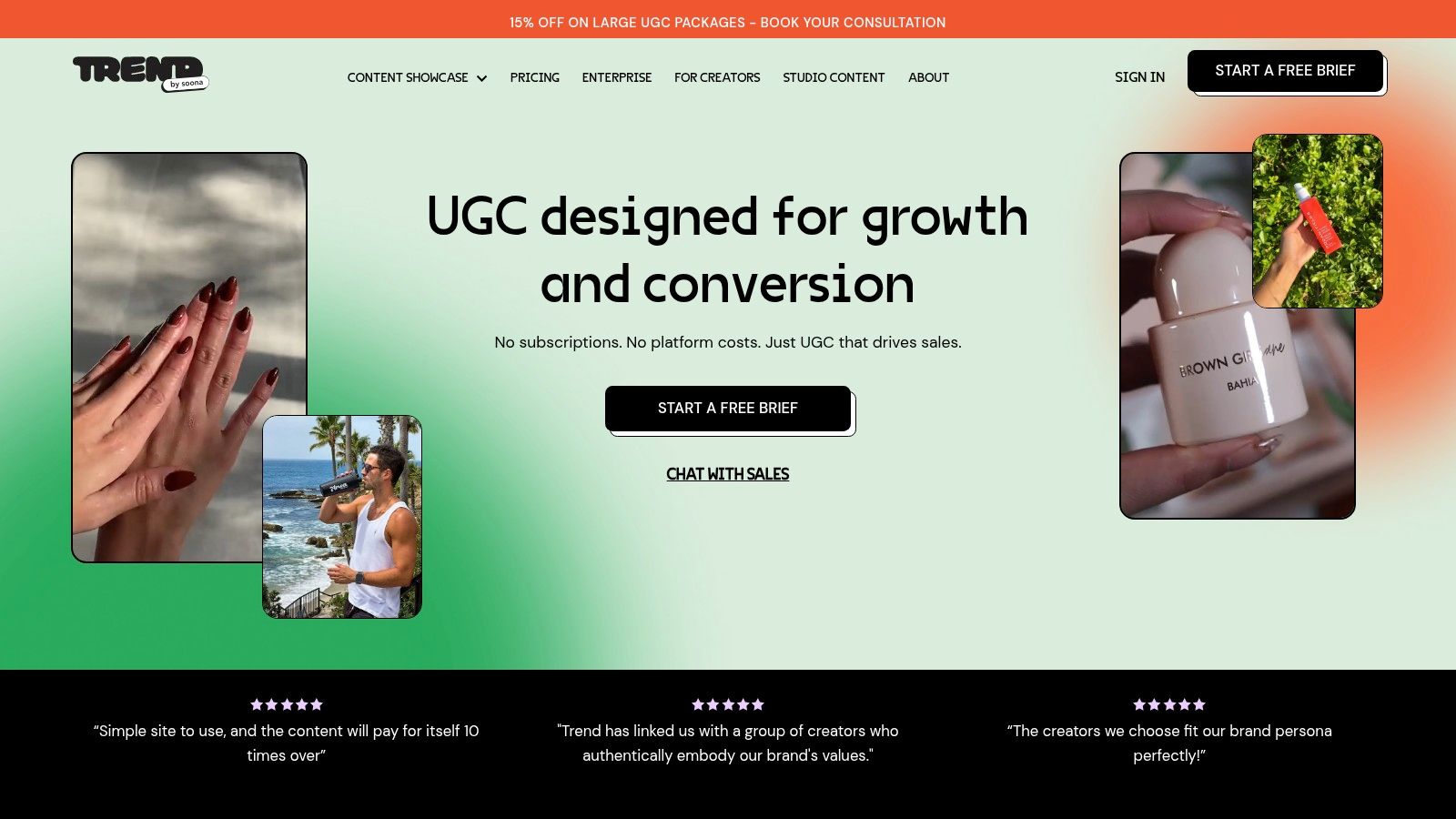
4. Trend
A creator who wants fewer pricing debates will find Trend easier to evaluate. Fixed price bands make the decision faster, since you can screen a brief without guessing how far the budget can move. The trade-off is clear. Less negotiation also means less room to price around unusual scope.
Scale: Trend works better for creators who want predictable opportunities than for those chasing broad, high-variance inbound volume.
Pay model: The fixed band approach gives you quick clarity on compensation, but it can flatten upside on more complex work.
Discoverability: It suits creators who want ad-ready briefs and a faster read on whether a brand fit is worth pursuing.
<a id="creator-side-fit"></a>
Creator-side fit
If your process is strongest when briefing, scheduling, and approvals stay in one workflow, Trend fits that rhythm. You spend less time switching tools and more time on the job itself. That said, the same structure can feel tight if the deliverable includes extra revisions, heavier usage, or a more specialized concept.
- Clear pay bands: Faster to decide whether a brief is worth applying to.
- Built-in messaging and scheduling: Useful if you want fewer handoffs after acceptance.
- Performance-creative orientation: Better for creators who can work in an ad-style format.
Creator-side barriers: Fixed ranges can work against you when the scope is custom or the rights package is broader than usual. The platform is easier to use, but easier does not always mean better priced. Creators with a strong personal rate card may find the ceiling restrictive.
Payout mechanics: The appeal is clarity, not surprise upside. You know where the pay starts, which helps with fast decisions. You also know where it stops, which matters if you sell premium usage or distinctive concepts.
<a id="what-to-watch-1"></a>
What to watch
Trend is strongest for short paths from brief to execution. It gives less room to price for heavier usage, more revisions, or demanding production conditions.
<a id="5-insense"></a>
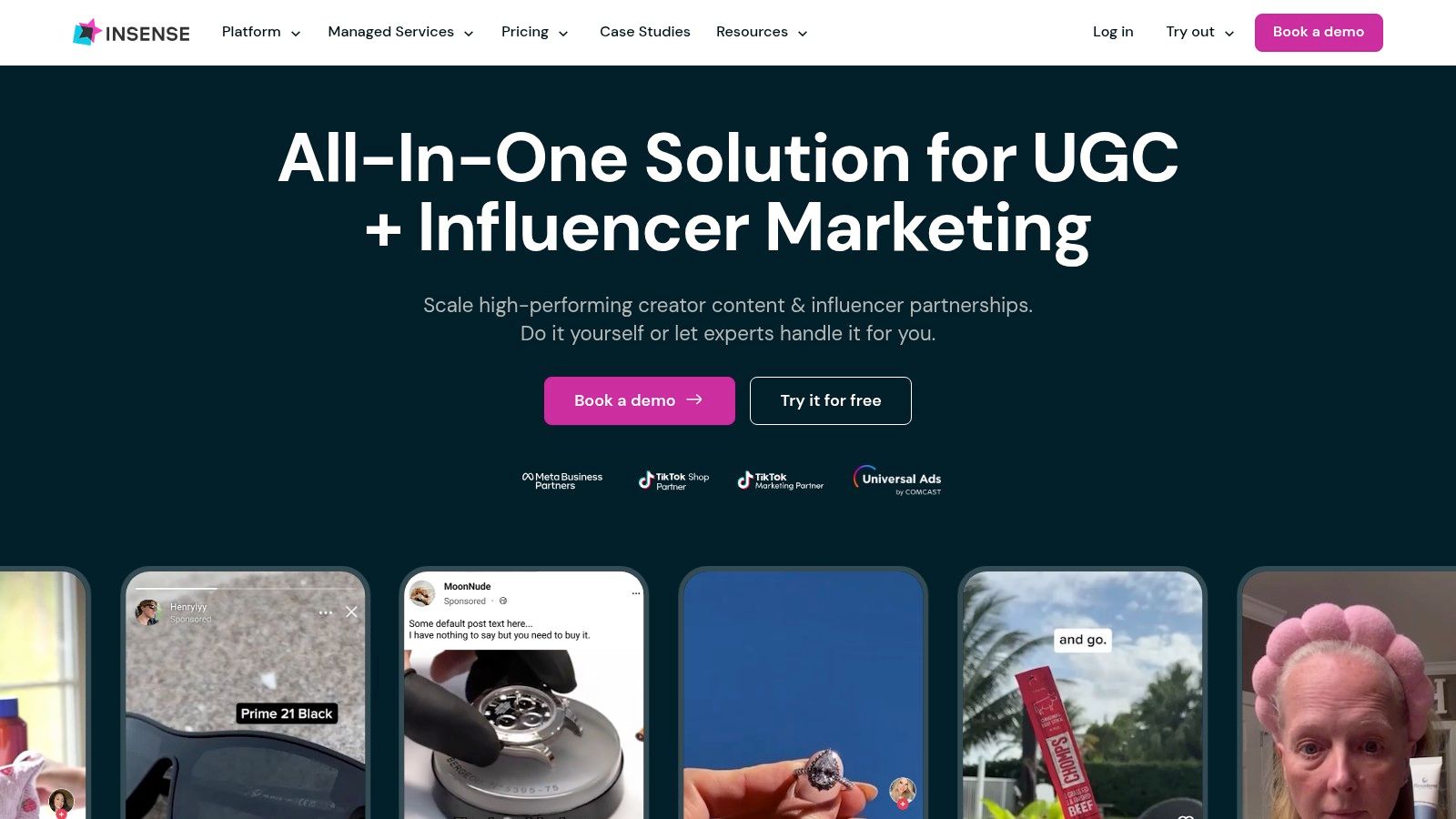
5. Insense
A creator who does well on Insense usually knows how to handle paid social work. The platform is built around licensing clarity and performance use, so the first question is not just whether the brief is interesting, but whether the rights terms make sense for the content you are being asked to create. If a brand wants whitelisting, Spark Ads, or other paid distribution, that structure can reduce back-and-forth before you commit.
Scale: Insense fits brands that treat creator content as something to run, test, and reuse in media, not just post once. That matters because UGC research still points to the prepurchase stage as the place where reviews, testimonials, and demos do the heavy lifting. A 2025 structured review of 342 research articles found that about 41% focused on that stage (UGC structured review).
<a id="the-practical-fit"></a>
The practical fit
If your strongest work already looks like ad creative, Insense gives you a cleaner route into brands that buy that way. You are not guessing whether the content will be used in a performance setting. You are working inside that assumption.
- Discoverability: Better for creators who fit paid-social briefs than for those who want open browsing.
- Pay model: Compensation usually makes more sense once usage is part of the conversation.
- Workflow fit: Useful if you are comfortable creating with ads in mind from the start.
Creator-side barriers: The platform asks for more than basic content skills. Some briefs come with broader usage rights, and that means you need to read the license closely before accepting. Miss that step and the rate can look better than it really is.
Payout mechanics: The value is tied to reuse. You are paid for content that can support a performance workflow, so compensation and licensing are linked from the start. That is fairer than treating rights as an afterthought, but it also means creators who charge premium usage rates need to be precise.
<a id="what-to-watch-2"></a>
What to watch
Insense is strongest for creators who already understand how social ads use UGC. It is a weaker fit if you want simple one-off jobs with minimal rights negotiation.
<a id="6-paid"></a>
6. #paid
#paid fits creators who already have enough traction to qualify and want curated briefs instead of open browsing. That selection process can save time if you are tired of sorting through low-fit opportunities. It also means the platform is not built for every creator, and it should not be your first stop if you are still building proof.
The trade-off is control versus access. You give up broad reach in exchange for cleaner brand matches and less noise.
This guide to finding paid UGC work is useful if you want to compare open marketplaces with more curated systems.
Scale: #paid sits closer to a filtered marketplace than a wide-open board. That makes it better for creators who want fewer but more relevant opportunities.
Pay model: The pricing and usage setup is usually more standardized, so there is less back-and-forth over scope. That can make compensation easier to judge before you accept.
Discoverability: Brands are matching on creator fit, not just content volume. If your profile and audience do not line up with what they want, you may not see much activity.
Workflow fit: The platform works best when you want a controlled process and are comfortable waiting for the right invite or brief.
Creator-side barriers: Entry is not open in the same way as a basic marketplace. If you are a beginner, that filter can feel frustrating. It also keeps the marketplace cleaner for creators who already meet the platform's threshold.
Payout mechanics: The upside is usually better campaign quality, not just more listings. Accepted creators can get a clearer path to serious brand work, but the payout value still depends on how closely the brief, usage terms, and your own rate expectations line up.
If you do not meet the audience threshold, move on and build proof elsewhere first. That usually gets you further than forcing a fit on a platform designed to screen aggressively.
<a id="7-aspire"></a>
7. Aspire
Aspire fits creators who want brand demand and a more mature collaboration stack. The platform feels like an active marketplace, not a simple list of leads. That matters if you want more than occasional outreach, because stronger brand demand usually means more campaign variety for approved creators.
Scale: Aspire sits at the larger end of the creator-marketplace spectrum, so the key question is whether that size gives you enough relevant work to justify checking it often.
<a id="why-creators-keep-it-on-the-shortlist"></a>
Why creators keep it on the shortlist
The appeal is practical. Aspire combines direct applications, brand invitations, and centralized communication, which cuts down on tool switching and keeps deliverables easier to track.
- No creator commission: A clear advantage for creators.
- Strong brand demand: Better for creators who want more than scattered, low-fit offers.
- Centralized workflow: Useful if you prefer keeping collaboration details in one place.
Creator-side barriers: Some campaigns still require minimum performance thresholds, so newer creators may be filtered out. The strongest invited opportunities can also draw heavy competition, which means the platform tends to reward polished profiles and clear proof of results.
Payout mechanics: No creator commission helps, but it does not change the fact that access is selective. Your rate still has to line up with the brief, and some briefs will ask for broader usage rights, so you need to read licenses carefully. See this guide to UGC rights management (https://www.topugctools.com/learn/ugc-rights-management) for how to evaluate usage terms before accepting.
<a id="what-to-watch-3"></a>
What to watch
Aspire works best for creators who already look credible on paper and want access to larger consumer-brand programs. If you are starting from zero, it can still be worth joining, but it should not be your only channel.
<a id="8-later-creator-and-brand-collabs"></a>
8. Later Creator & Brand Collabs
Later works well if you already use Later for social management or want campaign admin tied to your content calendar. The practical advantage is workflow fit. You can keep deliverables, deadlines, and media-kit visibility in one place instead of splitting them across tools.
If your bottleneck is organization, Later helps. If your bottleneck is finding more open listings, it is less compelling.
Workflow fit: That is the main reason creators keep it on the list. A clean campaign tracker matters when you are juggling several deals and cannot afford missed follow-ups.
<a id="what-changes-for-creators"></a>
What changes for creators
The browse-and-apply setup can reduce cold outreach time, and the built-in media kit gives brands a quicker way to review your profile. The trade-off is reach. It is not a fully open opportunity pool, so the number of accessible campaigns depends on what is currently available and who gets invited.
- Built-in media kit: Helps brands evaluate you faster.
- Campaign tracking: Keeps deliverables and timelines visible.
- Integrated stack: Fits creators already working inside Later.
Creator-side barriers: Some campaigns are invite-only, and open listings are not guaranteed. Compensation and terms vary by campaign, so each brief still needs a close read.
Payout mechanics: Later does not remove negotiation. It organizes the collaboration around it. That matters if you want cleaner operations, but not a fixed pay model. Read each license and usage term before you accept a brief, especially when broader rights are involved. See this guide to UGC rights management (https://www.topugctools.com/learn/ugc-rights-management) for a practical way to evaluate those terms.
<a id="what-to-watch-4"></a>
What to watch
Later is strongest when organization matters more than access. If you want the most immediate volume of open listings, another platform may fit better.
<a id="9-pearpop"></a>
9. Pearpop
Pearpop fits creators who want performance-linked deals and can deliver consistent views or engagement. The trade-off is simple. Higher upside usually comes with more uncertainty, so the platform works best if your content already performs and you are comfortable being paid against results.
Pay model: That is the main decision point. Creators who can reliably hit performance targets may like the format because strong output can justify the payout. Creators who want fixed compensation will likely find it harder to use.
Pearpop's mobile onboarding and activation-led setup make it feel closer to a challenge-based marketplace than a standard UGC board. That changes how you judge it.
Scale: Access depends on active opportunities, so the pool is tied to what brands have live. Discoverability: The format can put you in front of recognizable brands, but only if your profile and results match the brief. Workflow fit: The platform suits creators who are comfortable moving fast and tracking outcomes closely, less so creators who want a predictable application pipeline.
Creator-side barriers: Some opportunities hinge on view thresholds, so you need to read the measurement rules before you accept. If success depends on reach, confirm exactly what counts and when it is measured.
Payout mechanics: The structure can reward strong distribution, but it also shifts more risk to the creator. That is acceptable for creators with reliable audience response and less attractive for anyone who wants guaranteed pay on every project.
<a id="what-to-watch-5"></a>
What to watch
Pearpop makes the most sense when you already have momentum. If you need straightforward compensation and low friction on every deal, it is a weaker fit.
<a id="10-top-ugc-tools"></a>
10. Top UGC Tools
Top UGC Tools earns a place on this list because it is a comparison layer, not a marketplace. If you are choosing among the best UGC platforms for creators, the hard part is usually sorting the trade-offs before you apply. This site helps you compare where opportunities live, how tools are organized, and which systems are worth testing.
For creators, the useful part is the signal mix. The directory is live and searchable, with active tools such as SideShift, Trybe, and Launchpoint, so you are looking at current listings rather than a static roundup. That matters because creator formats, commercial models, and measurement needs keep shifting.
<a id="why-creators-use-it"></a>
Why creators use it
Top UGC Tools is useful when you want to compare the practical terms, not just the pitch. That includes scale, pay model, discoverability, and workflow fit, plus the entry friction and payout setup behind each platform.
- Signal-driven directory: Fast scanning for performance, payouts, discovery, tracking, and hooks.
- Side-by-side comparisons: Helpful when you need to separate one platform's business model from another.
- Independent reviews: Useful when you want product detail without leaning on vendor claims.
If you are also building a repeatable workflow, the UGC campaign management tools guide is a practical follow-on. It helps once you move from evaluating platforms to managing campaigns across them.
Creator-side limits are straightforward. You do not book work or get paid through the site, so it is not a transactional marketplace. It is a decision layer that helps you judge where to spend your time.
The payout question is simple too. Top UGC Tools does not broker payments, which means the value is in comparing platform economics before you commit. That makes it more useful for choosing than for executing.
<a id="what-to-watch-6"></a>
What to watch
Use Top UGC Tools when you want to check the market before joining everywhere. It fits creators who care about platform fit, entry barriers, and payout mechanics, not just the number of listings.
<a id="top-10-ugc-platforms-comparison"></a>
Top 10 UGC Platforms Comparison
| Platform | Key features (✨) | Quality (★) | Pricing / value (💰) | Best for (👥) | |---|---:|:---:|---:|---| | Billo | ✨ Mobile-first, brief-driven video briefs; standardized deliverables | ★★★★☆ | 💰 Per-video list pricing; entry-level rates | 👥 New & mid-tier creators building paid portfolios | | Collabstr | ✨ Creator storefronts, package listings, escrow & ratings | ★★★☆☆ | 💰 Creator-set packages; free to join | 👥 Creators who want a public, self-priced portfolio | | Influee | ✨ App briefs with payment protection & country price benchmarks | ★★★★☆ | 💰 Regional benchmarks; 5–10 day payouts | 👥 Creators across 30+ countries seeking secure payouts | | Trend | ✨ Curated marketplace with fixed price bands & workflow tools | ★★★★☆ | 💰 Fixed price bands (transparent, caps upside) | 👥 Brands & creators who prefer set price ranges | | Insense | ✨ Licensing/usage clarity, paid-social workflows & contracting | ★★★★☆ | 💰 Structured compensation guidance; varies by brief | 👥 Creators working on ad-ready, performance campaigns | | #paid | ✨ Standardized pricing/usage, opt-in invites & brand curation | ★★★★☆ | 💰 Standardized rates; entry thresholds apply | 👥 Creators with ~10k+ followers and steady engagement | | Aspire | ✨ Large marketplace, AI discovery, no creator commission | ★★★★☆ | 💰 Free for creators; brand-funded campaigns | 👥 Creators seeking broad brand opportunities & sponsorships | | Later Creator & Brand Collabs | ✨ Campaign discovery + media kit + campaign tracking | ★★★☆☆ | 💰 Varies by campaign; negotiation required | 👥 Creators using Later who want centralized logistics | | Pearpop | ✨ Performance‑based activations, mobile onboarding, studio | ★★★☆☆ | 💰 Performance-linked payouts; variable earnings | 👥 High-reach creators who earn from views & performance | | Top UGC Tools 🏆 | ✨ Live searchable directory, independent reviews, side-by-side comparisons, structured tags | ★★★★★ | 💰 Free editorial & directory (no marketplace fees) | 👥 Creators, brand/growth marketers, paid‑social teams, researchers |
<a id="choosing-the-platform-that-fits-your-workflow"></a>
Choosing the Platform That Fits Your Workflow
The best choice usually isn't the platform with the loudest branding. It's the one that matches your audience size, your pay preference, and how much rights friction you're willing to handle. A creator with no audience and a need for fast cash flow will look at Billo, Collabstr, or Influee very differently from a creator with a polished profile and stronger reach who can qualify for #paid, Aspire, or Pearpop.
Start by sorting the field into three buckets. First, platforms where you can join and start building proof quickly. Second, platforms where payment clarity and rights language are strong enough to protect your margin. Third, platforms that reward audience size or performance, which are better if you already have traction. That's a more honest way to compare than asking which platform is “best” in the abstract.
Then check the current usage terms, entry rules, and payout timing directly on each site before you apply. Those details change, and they affect your real take-home value more than a homepage feature list does. The practical question isn't just whether a platform has work, it's whether you can complete that work without losing time to delays, scope creep, or unclear licensing.
If you're just starting, test one low-friction marketplace and one more curated option. If you already have some proof, add a platform with stronger rights clarity or better brand demand. That gives you a clearer read on which system fits your workflow instead of guessing from feature pages.
Top UGC Tools gives you a faster way to compare creator marketplaces, payment models, and workflow fit in one place. If you want to shortlist platforms with less noise, visit Top UGC Tools and use the live directory to check what's active before you spend time applying.
Refined using [the Outrank app](https://outrank.so)